✦ Top Casinos



























How To Play Blackjack With Playing Cards
How to Play Blackjack With Playing Cards: A Clear Guide for Real Tables
Start With a Standard Deck and One Clear Goal
Blackjack is one of the easiest card games to set up with real playing cards because the equipment is minimal. You need a standard deck with the jokers removed, a flat surface, and something to use as betting tokens. If you are playing casually at home, one deck is enough. For a more casino-style feel, you can combine several decks, but agree on the number before the first deal. The goal is simple: build a hand total closer to 21 than the dealer’s without going over. A total above 21 is a bust, and a busted hand loses immediately. Suits do not matter in blackjack, so a seven of hearts has the same value as a seven of spades. Focus on totals and decisions rather than on matching suits.
Know the Values Before the First Card Is Dealt
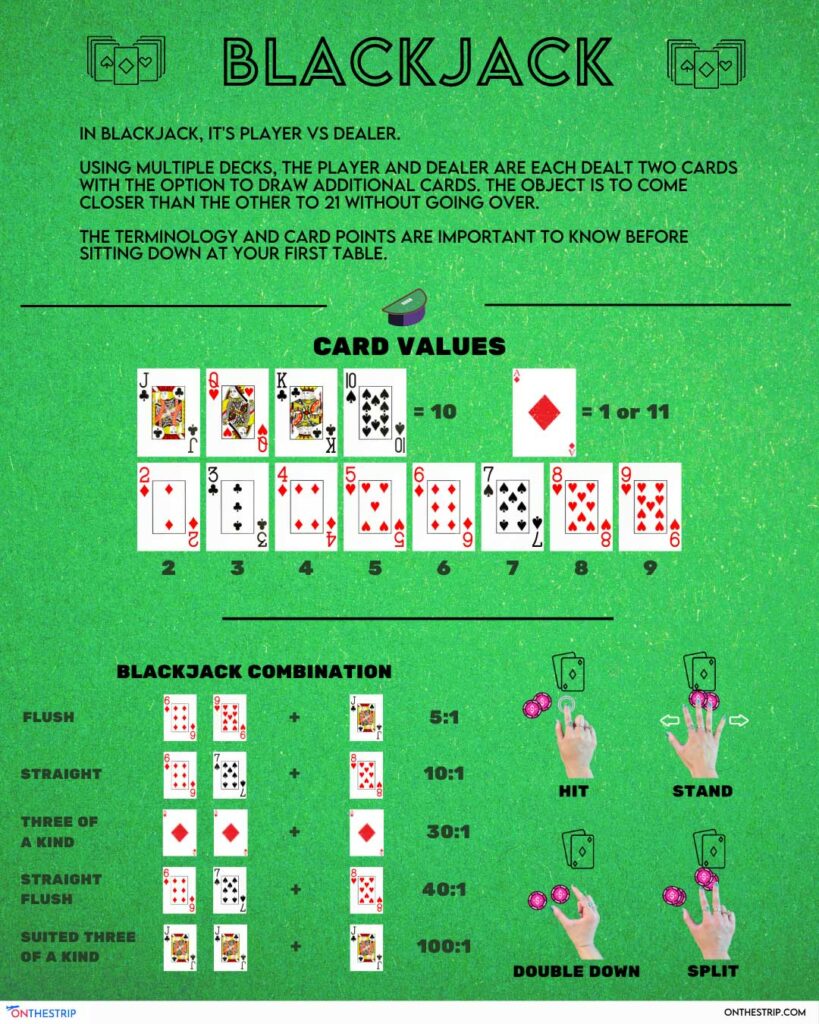
Before you shuffle, make sure every player understands how the cards are valued. Number cards are worth their face value. Tens, jacks, queens, and kings are worth ten. An ace is flexible: it can count as one or eleven, whichever helps the hand most without causing a bust. For example, an ace and a six make either seven or seventeen. If you draw a ten after that, the ace switches to one and the hand becomes seventeen, not twenty-seven. A two-card hand with an ace and any ten-value card is a natural blackjack. It is stronger than an ordinary 21 made with three or more cards, so decide before play how your group will treat it. Clear values prevent arguments later.
Set the Table and Deal a Hand
Choose someone to act as dealer. Each player places a token or stake in front of them, then the dealer shuffles thoroughly and deals clockwise. A common method is to give each player one card face up, then give the dealer one card face up and one card face down. Players receive a second face-up card, while the dealer’s second card stays hidden. At home you can simplify this, but keep the dealer’s hole card secret until the players have acted. Players look at their two cards and decide how to play. The dealer does not play yet; the dealer’s job is to deal cards and later resolve the hand according to the agreed rules. If you are practicing alone, deal two player hands and a dealer hand to compare decisions.
Choose Hit, Stand, Double Down, or Split
A player’s first decision is usually whether to hit or stand. Hit means take another card. Stand means keep the current total and end your turn. If you go over 21, you bust and your hand is finished. Double down is an option on your first two cards: you increase your bet, receive one more card, and then stop. Use it only when the rules allow. Splitting is available when your first two cards are a pair or share the same value. You place a second bet, separate the cards into two hands, and play each one. Some home games allow only one split, while others allow more; agree on this beforehand. If you split aces, many groups allow one card per hand and no further hitting; confirm that house rule before the deal.
Follow the Dealer’s Rules and Settle the Hand
After every player has finished, the dealer reveals the hidden card. The dealer then draws according to the table rule, usually hitting until reaching at least 17 and standing on 17 or higher. Some games require the dealer to hit on a soft 17, so decide that rule before the game starts. If the dealer busts, every remaining player wins. If the dealer does not bust, compare totals: the higher total wins, equal totals push and the bet is returned, and a player who busts loses regardless of what the dealer does later. A natural blackjack usually beats a normal 21, but payout details vary, so state them clearly before dealing. Settle each hand promptly to keep the table organized.
Use Simple House Rules to Keep the Game Smooth
A friendly game runs best when the group agrees on a few house rules before the first shuffle. Decide whether the dealer stands or hits on soft 17, how many splits are allowed, whether double down is permitted after a split, and how a natural blackjack is paid. Keep the dealer’s decisions consistent from hand to hand. If you are learning, deal slowly and announce each total out loud so everyone can follow. You can also practice with tokens instead of real stakes, which keeps the focus on learning the flow of the game. Once the routine feels natural, the game moves quickly and feels much more like a real blackjack table.
Playing blackjack with playing cards comes down to a few basics: know the card values, deal a clear first hand, choose hit, stand, double, or split, and apply the dealer’s rules consistently. Agree on house rules before you start, keep the dealer’s hole card hidden until the right moment, and settle each hand promptly. With a standard deck and a little practice, you can run a smooth home game and understand exactly what every decision means.

Related Posts
-
 asOL6dadv_o 1 week agoReply
-
 all41-studios 1 week agoReply
-
 RNw4fmWU_Uk 1 week agoReply
-
 AmtoPhxI0-A 1 week agoReply
-
 f1-arcade 1 week agoReply
-
 f1arcade_es 1 week agoReply